
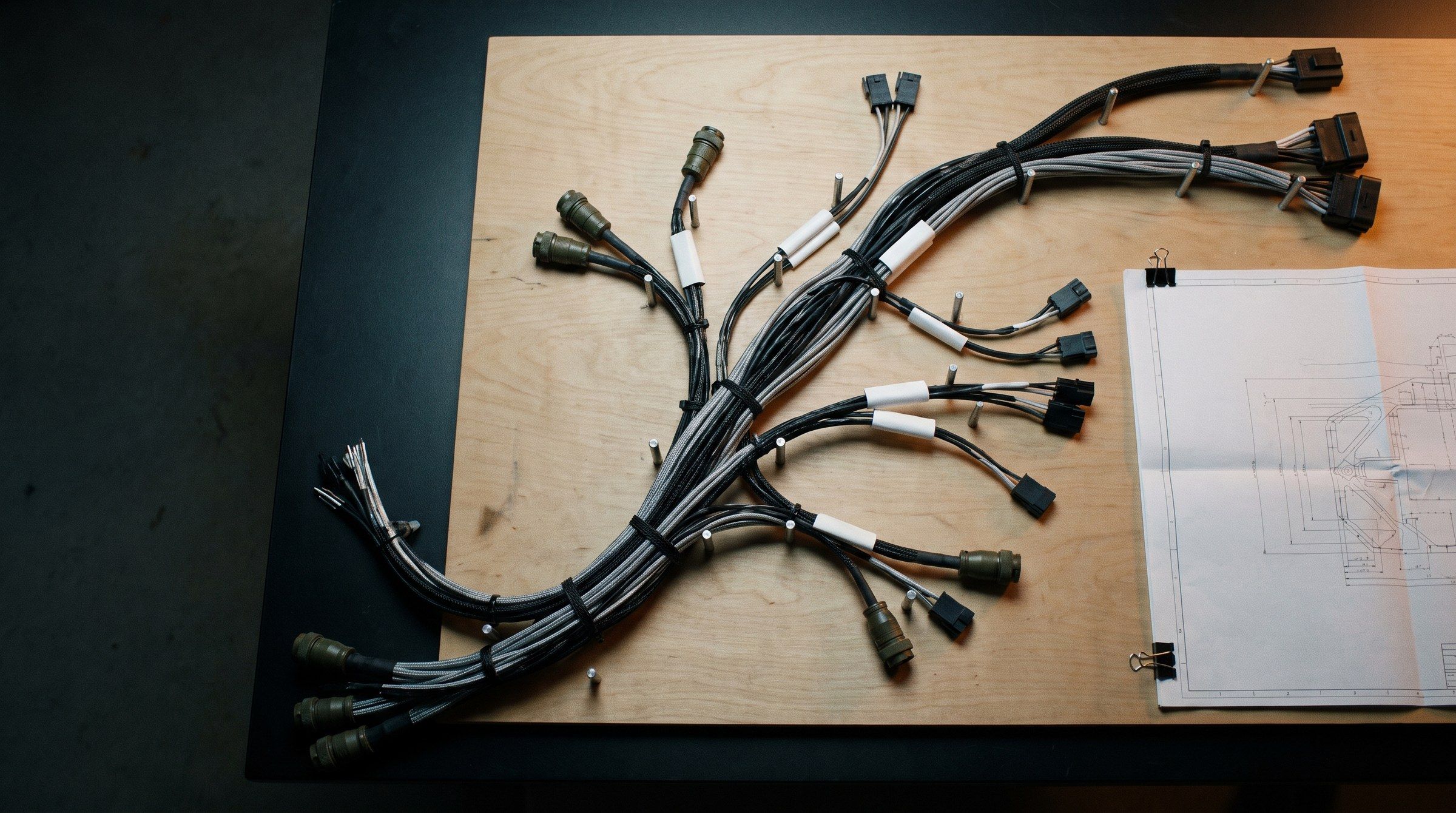
Wire harness design & assemblies
Harness design and documentation in-house; build-to-print and build-to-design harness and cable assemblies produced by qualified manufacturing partners.
Engineering coordination, sourcing and production support for wire harnesses, cable assemblies, electrical assemblies and interconnect systems.
Wire harnesses and interconnects carry power, signal and data through every platform. LIGHTNX designs harnesses in Zuken E3.series and CR-8000 with a maintained ECAD component library, models mechanical integration in PTC Creo, and treats each assembly as a system of decisions — contacts, inserts, shells, backshells, shielding, conductors, marking and routing hardware — each with its own sourcing, quality and documentation implications.
From a single crimped contact to the platform it powers: harness engineering, build by qualified manufacturing partners, inspection and test, then installation across air, land and maritime systems.
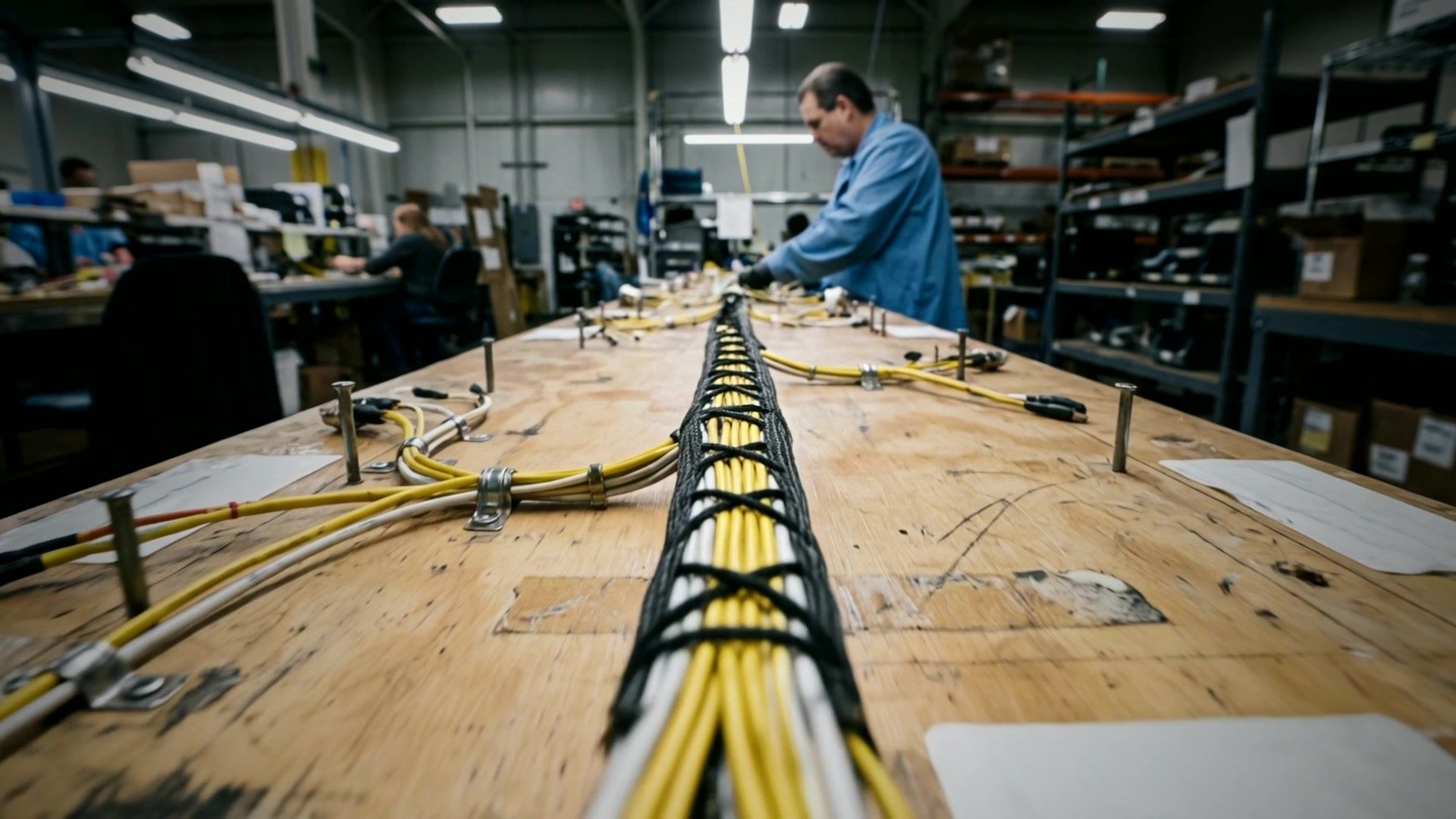
Harness design and documentation in-house; build-to-print and build-to-design harness and cable assemblies produced by qualified manufacturing partners.
Circular and rectangular connectors, contacts, backshells, accessories and tooling-dependent components.
ECAD drawings, wiring lists, formboard layouts and marking requirements checked for completeness before release.
Termination, inspection and electrical test requirements flowed to the builder and confirmed in the delivery record.
Designs, libraries and drawings are produced in-house, so what a supplier builds and tests traces directly back to the engineering definition.
Zuken E3.series and CR-8000 for schematics, wiring lists, harness layouts and formboard drawings.
Connector, contact, wire and accessory parts modeled with pinouts and attributes so every design is buildable and sourceable.
PTC Creo for 3D routing, bracket and enclosure design, bend radii and clearance checks.
Continuity, insulation-resistance and functional test requirements defined for the builder and verified in the delivery record.
Scroll to separate a generic circular interconnect along its assembly axis — contacts, insert, shell, coupling ring, backshell, boot, shield, conductors and routing hardware. Each part is a sourcing, quality and documentation decision.
The same engineering discipline applies wherever power, signal and data have to survive vibration, temperature, moisture and tight routing.
Avionics and equipment-bay harnesses, weight-conscious routing, configuration control.
MarketsVehicle electrical architecture, power distribution, ruggedized connectors and enclosures.
MarketsShipboard cabling, sealed assemblies and corrosion-resistant interconnect.
MarketsInterconnect for communications, sensors and electronic enclosures.
Markets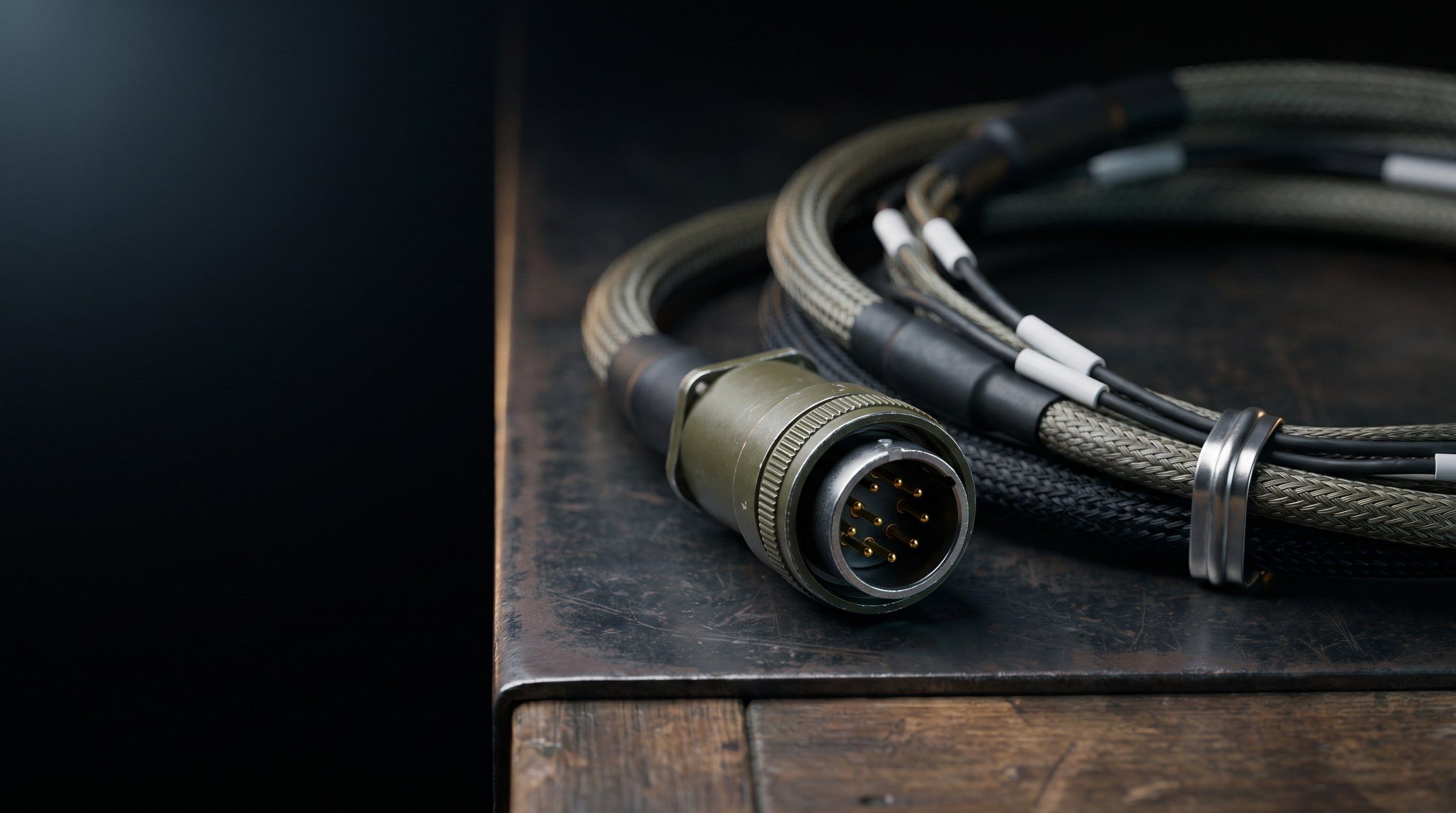
Configuration, materials and acceptance tests confirmed against the drawing package.
Interconnect components and wire sourced with documentation suited to the requirement.
Assembly performed by a qualified harness manufacturer to the flowed-down requirements.
Inspection and test records collected and reviewed before shipment.
Start with a non-sensitive overview. Controlled technical data is exchanged only through the authenticated Program Workspace.
Tell us what the program needs, when it is needed and which documentation matters. We will review it and define the path to delivery.