
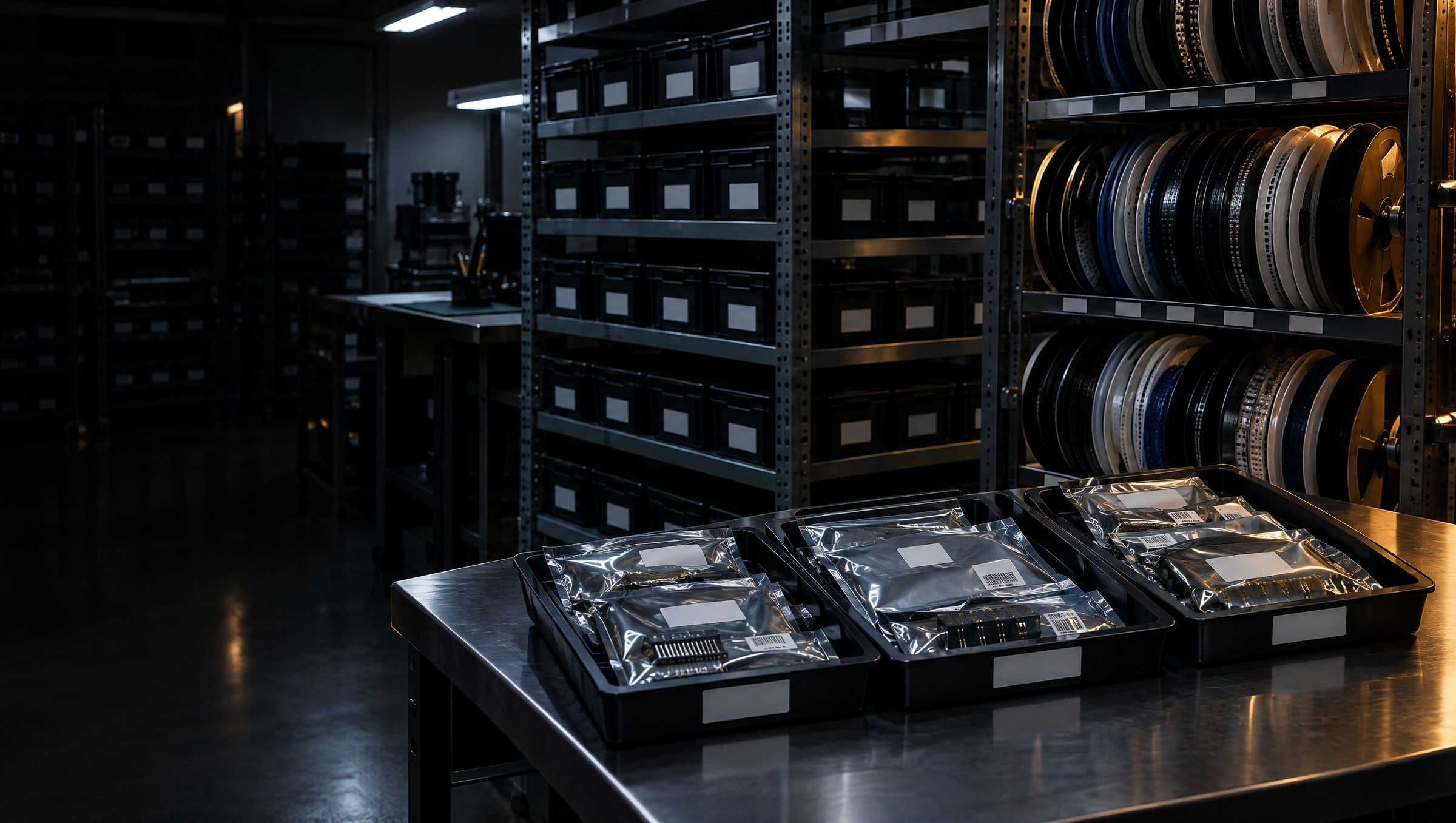
Component procurement
Electrical, electromechanical and mechanical components and materials, including hard-to-find, long-lead and obsolete items.
Component and material procurement built on supply pathways that are evaluated before commitments are made — not a search after the fact.
Every part number carries questions: who can actually supply it, in what condition, with what documentation, at what lead time and under which trade conditions. Strategic sourcing answers those questions systematically, so the sources that remain are the ones that can execute.
Electrical, electromechanical and mechanical components and materials, including hard-to-find, long-lead and obsolete items.
Manufacturers and authorized channels identified first; each source evaluated against the technical, documentation and quality requirement.
Provenance, certificates of conformance and lot identity confirmed and kept with the order record.
Sources assessed for capacity and lead time, not only stock — so a pathway can carry follow-on and production quantities.
Single-source, allocation and end-of-life exposure identified early, with alternates proposed for customer approval.
Sourcing plans, availability views and commercial proposals structured around program schedules and documentation needs.
Potential sources are filtered for technical fit, documentation and traceability, compliance and trade screening, and capacity — before any commercial commitment.
Illustrative model of the sourcing method — not a map of specific suppliers or locations.
Animation: a requirement at the center connects to many potential sources. Four evaluation filters — technical fit, documentation and traceability, compliance and trade screening, capacity and schedule — progressively remove sources until a small set of qualified supply pathways remains.

The requirement is broken into sourcing lines with technical and documentation needs.
Potential sources are identified for each line.
Sources are screened for technical fit, documentation, compliance and capacity.
A commercial proposal is built on the qualified pathways only.
Start with a non-sensitive overview. Controlled technical data is exchanged only through the authenticated Program Workspace.
Tell us what the program needs, when it is needed and which documentation matters. We will review it and define the path to delivery.