
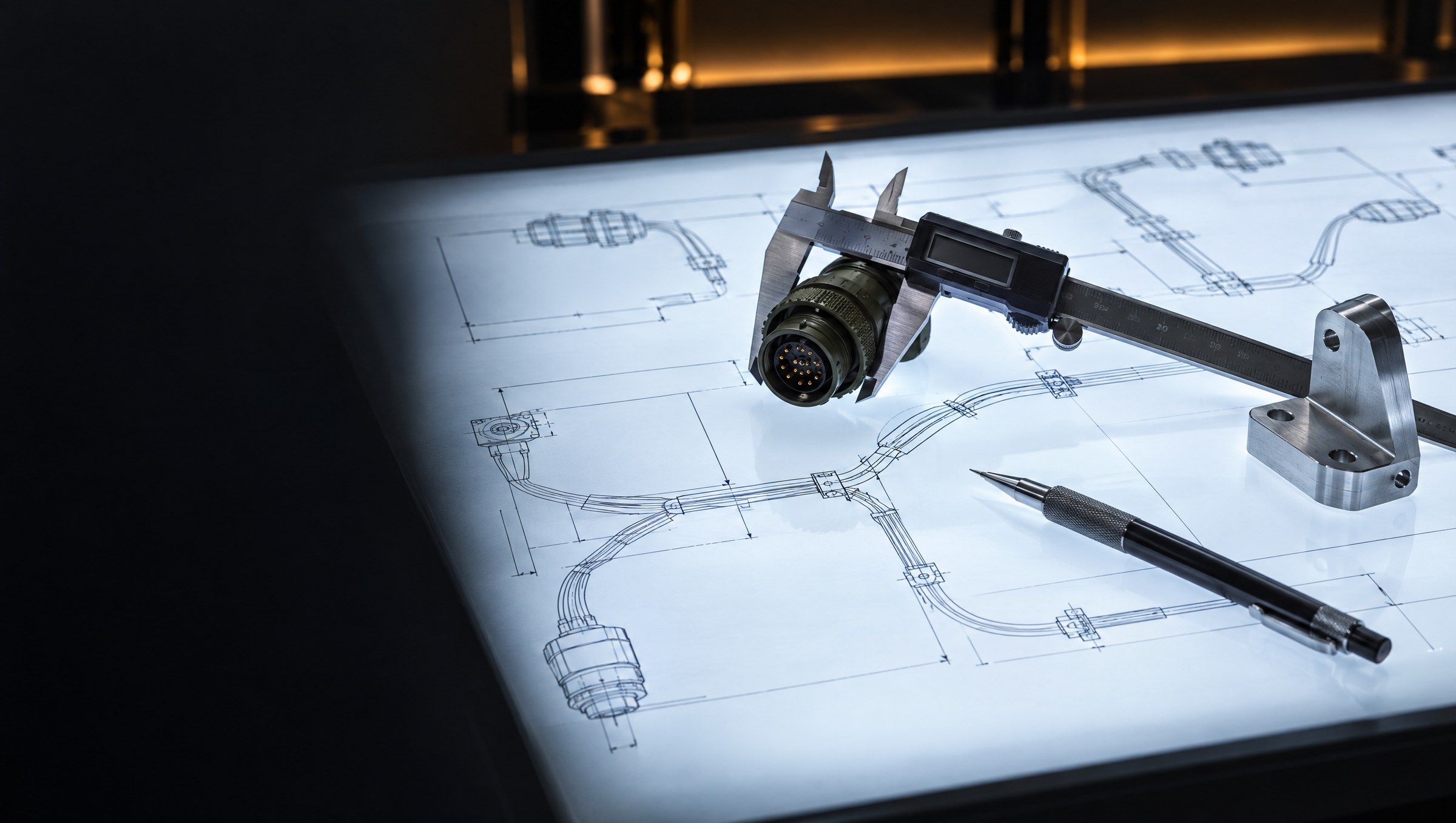
Technical requirements analysis
Drawings, specifications, referenced standards and quality provisions are reviewed together so conflicts and gaps surface early.
Engineering review is where supply risk is cheapest to remove. LIGHTNX evaluates technical data, specifications and quality provisions before a single part is ordered.
Defense requirements arrive as drawings, specifications, parts lists and contract quality clauses — often incomplete, sometimes contradictory. Our engineering function turns that package into a supplier-ready definition: what is required, how it will be verified, and which decisions the program still has to make.
Drawings, specifications, referenced standards and quality provisions are reviewed together so conflicts and gaps surface early.
Structured bills of material are developed against validated supply pathways, availability and program constraints.
Where the customer owns the design, we flag obsolete, single-source or long-lead items and propose alternates for the customer’s engineering decision.
Revisions are tracked through the supply chain so every supplier builds to the same configuration.
Designs, libraries and drawings are produced in-house, so what a supplier builds and tests traces directly back to the engineering definition.
Electrical schematics, cable and harness design, formboard drawings and wiring lists, built on a maintained ECAD component library.
Mechanical design and 3D modeling for brackets, enclosures, routing space claims and fit checks.
Manufacturing-ready drawings, BOMs, test definitions and validation criteria that qualified suppliers build and test to.
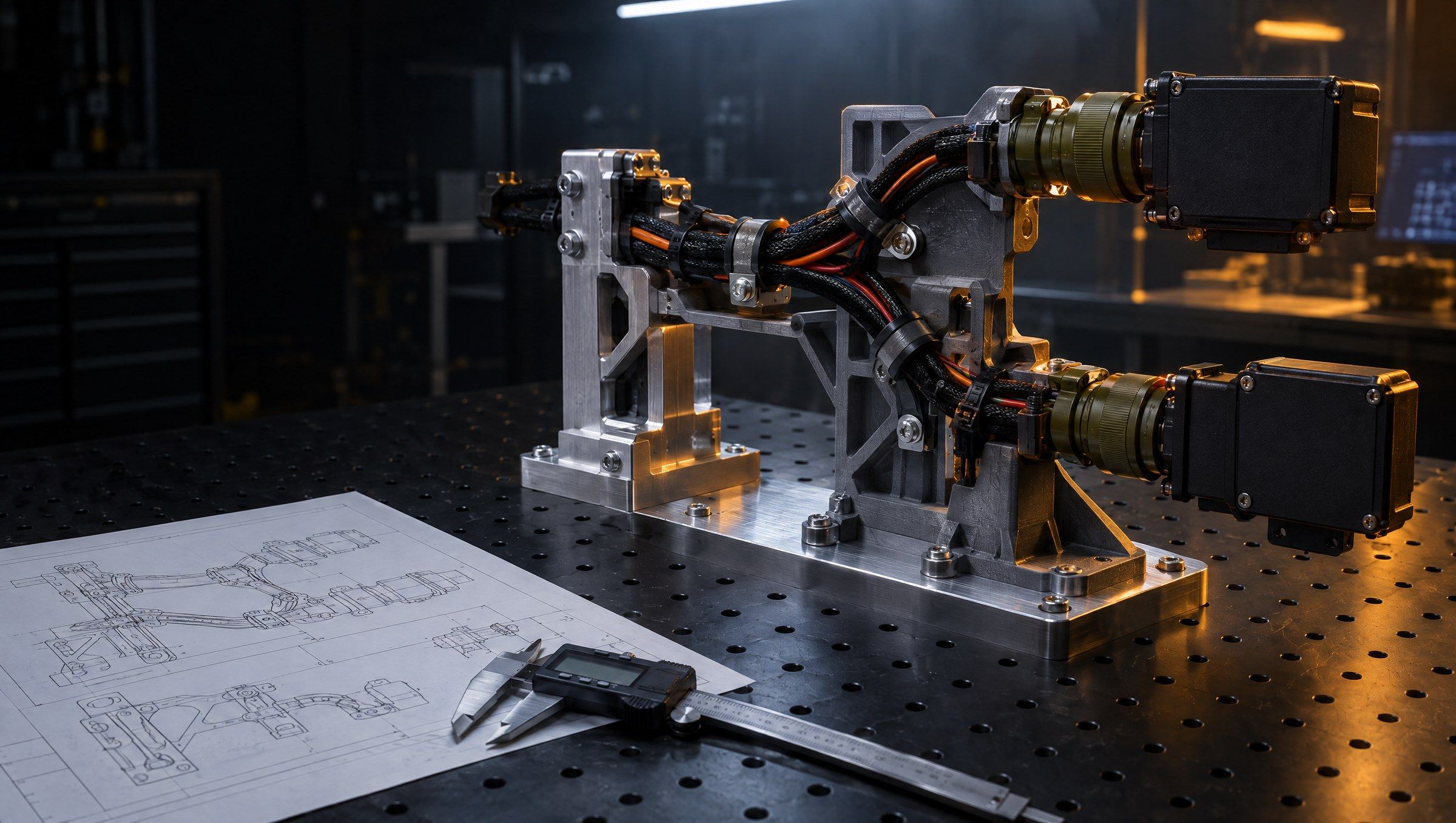
Technical package received through the controlled Program Workspace.
Requirements, standards and acceptance criteria are mapped line by line.
Open questions and assumptions are documented and resolved with the customer.
A supplier-ready requirement set is released into sourcing.
Start with a non-sensitive overview. Controlled technical data is exchanged only through the authenticated Program Workspace.
Tell us what the program needs, when it is needed and which documentation matters. We will review it and define the path to delivery.